Discussion Continues; Internet of Things; Robot Personality

Chaos Manor View Monday, April 06, 2015

clip_image001

I have been very busy. Of course last week was Easter week, with family obligations; and next week is Writers of the Future, and just after that the taxes are due. And for better or worse I am still in a walker, although there are faint indications that by the end of Summer I will only need a cane. Wish me well.

Meanwhile there will be a new release of the first two (of ten) volumes of There Will Be War; I have found a publisher willing to do all the paperwork and pay the contributors, which was important because I can’t undertake that burden. Look for them in a couple of months. We’re getting them ready, and I am writing a Preface to the 2015 release.

clip_image002

http://www.usatoday.com/story/money/columnist/2015/04/04/weisman-internet-of-things-cyber-security/70742000/

Are you safe in the Internet of Things? (USA Today)

Steve Weisman, for USA TODAY 9:02 a.m. EDT April 4, 2015

The Internet of Things, the popular name for the technology by which devices are connected and controlled over the Internet, is big, and it is only getting bigger. The presently estimated number of Internet of Things devices of 4.9 billion devices is expected to rise to 25 billion by 2020. IBM has recognized the opportunities present in the Internet of Things and earlier this week announced it is investing $3 billion in a new business unit that will focus entirely on developing products and services for the Internet of Things.

What kinds of things make up the Internet of Things? Products include cars, refrigerators, coffee makers, televisions, microwave ovens, fitness bands, thermostats, smartwatches, webcams, copy machines, medical devices and even some sex toys.

So where are you vulnerable? A better question might be where are you not vulnerable?

A study last year by HP Security Research concluded that 70% of the most commonly used Internet of Things devices had serious security flaws with 90% of the devices using unencrypted network service and 70% vulnerable through weak passwords.

A recent report issued by the Government Accountability Office found that the computers that make up the National Air Traffic Control System are vulnerable to hacking. The GAO issued 17 recommendations and 168 specific actions to address security weaknesses in security controls including — what should have been obvious — the need to encrypt sensitive data. The threat here, as noted by New York Sen. Charles Schumer, is that “sophisticated terrorists could even steer planes into one another. The threat of a cybercriminal taking over this system makes your stomach sink.”

Now your house can be hacked…

clip_image001[1]

My short squib on Freedom vs. Diversity generated less hate mail than I expected, and some thoughtful comments.

White only

When I hear of business owners being able to put up signs like “White Only” I get the feeling this was something distasteful from our history.
Something (I read) that took a fair amount blood & sweat to get rid of.
Are “White Only” signs a symbol of freedom or something else?
R

It depends: if you are required by law to display that sign it is clearly no sign of freedom, just as a sign that said Blacks Only could be either a sign of freedom or an imposition of the state. Freedom of association is a freedom; where public facilities are involved clearly there is a right of the public to enjoy them.

Enforcement of such restrictions is worth debating, but you didn’t ask that question. In practice, no one sues to join a Blacks Only club…

Discrimination or slavery?

You said, “[N]o one questions the source of this right, not to marry, but to require a particular baker to sell them a cake.”
I couldn’t agree with you more on your statements on this ridiculous notion that business owners and even private citizens can be forced to comply with the moral judgements of those in authority or those who happen to be screaming the loudest at the time. There is, however, the notion that publically owned corporations should exist for the public good and this would require them to abide by the strictures of non-discrimination. This makes sense to me since these corporations truly are just an extension of the public and its needs; though a very good argument could be made that this is not true since only the stock holders truly own the company. Privately held corporations and private businesses, not so much. My personal belief is no public corporation should be allowed to exceed 10,000 employees just as no single government program should exceed this size, but that is another chat entirely. What we are seeing here is clearly the progressive notion that no person is truly private and that all businesses have some public component to them. That this allows government to pretty much do anything it pleases is quite evident in the behavior and statements of our current president.
Your above statement, however, ignores a very large elephant in the room. None of the bakers, florists, pizza vendors, etc. that I have read about have a problem selling to anyone. Walk into their shop and order a cake, a cut of flowers, or a pizza and then walk out with them, not a problem even if it is quite obvious that you are gay. Where they object is they are being asked to cater a wedding or a party and the theme is a gay theme. This is where the problem lies. They are being forced to perform labor that violates their religious beliefs by giving tacit approval to something they believe is forbidden. It is truly no different than forcing a Jewish deli to cater a pig roast for a Hawaiian luau or an atheist book store to hold a bible study class. It is blatant and obvious slavery. One class of citizens – homosexuals – hold legal authority over all others and can force them to perform labors even when those labors are abhorrent to them. Rather than being something that perhaps violates a non-discrimination requirement in public service, this seems to me to clearly violate the 1st, 13th, and 14th Amendments by forcing one group to work for another group.
As always, thanks for all you do,
Braxton Cook

I am not concerned with their reasons; but when a baker is faced with jail because she will not make a wedding cake for a gay marriage, that is tyranny. As to publicly owned corporations that i9s a matter of discussion: but the stock holders bought the stock of their own free will, and if enough of them object to a corporate policy, they own the company do they not?

In response to your posting on anti-discrimination laws, I see three separate issues. First, the historical reasons for racial Civil Rights action, second the justification for Federal involvement, third the current gay rights issues.

Discrimination

The reason that the federal Civil Rights Act was needed was to dismantle systematic oppression of black Americans (specifically Southern black Americans) by white Americans (again, specifically Southern white Americans). This went far beyond state government action. If one restaurant won’t serve you or employ you, that’s one thing. If all of them won’t, that’s quite another. In the context of the Cold War, this was providing a massive propaganda advantage to the Soviets. See:
https://en.wikipedia.org/wiki/And_you_are_lynching_Negroes
This is why Brown v. Board of Education was unanimous. Yes, that was dealing with government equality, but the concerns were similar.
The question of where in the constitution laws applying to private parties are authorized has two answers: One, they aren’t in the text itself. Two, there was a mini-revolution during the Franklin Roosevelt administration that greatly expanded the scope of the commerce clause, and under that the commerce clause gives the federal government the authority to do this. I know you don’t consider that legitimate, but it did happen and is unlikely to change any time soon (though the dissent in the Obamacare case did seem to nibble at the farthest excesses of that interpretive regime, though that was of course a dissent).
On the subject of gay rights, there is no federal law against discrimination either in employment or in service. The cases one hears about are under either state or local law. Ironically, Indiana has no anti-discrimination laws regarding homosexual orientation so the whole hubbub was about overly broad (according to detractors) exceptions to a non-existent law. Though I suppose it might interfere with some local ordinances (which when Colorado did it in the 1990s, caused Justice Kennedy to become quite irate).

Two points: I do not question the need for or the constitutionality of the laws ensuring the right to vote no matter what race; I will debate the wisdom of some of their provisions, but not their intent. It is regarding private property and businesses I have concerns.

Either it is a free country or it is not.

The matter of Federal threats and gay rights is another discussion. Where state legislatures have acted is one matter; where fresh new rights were found in old documents is another.

Americans with Disabilities Act is Federal, and exceeds constitutional powers. It seeks to give disabled people equality with others; this is impossible, and why can it be imposed on those unwilling? It leads to absurdities, but it is wrong at bottom.

As you say, Brown dealt with public resources. It also was an abject failure in providing good shools to all races.

clip_image001[2]

Jerry,
Fox News is reporting on the idea to modify passenger jets to be remotely piloted in case some pilot, or terrorist, decides to fly the plane into the ground or a building. This idea was put forward shortly after 9/11 as well. I thoroughly criticized the idea then and I wish to do so now, though Fox is not allowing comments on the report. I thought I would reach out through your blog.
Allowing passenger jets to be remotely piloted is the most terrifying proposal I have ever heard. Right now, if a nefarious person wishes to crash a plane on purpose, that person must first board the plane and then violently take control of it. Remote piloting changes that equation completely.
With remote piloting in place, a terrorist organization merely needs to break the security of the system. It can then hijack every single passenger plane in the air and fly them all into buildings from the comfort of home. No personal presence on the plane is needed.
No one should fool themselves that a system for remote piloting a plane can be secured against intrusion. After all, the proper authorities have to have access. If ANYONE has access, it is only a matter of time till EVERYONE has access.
The answer to the problem of hijacking, either by a terrorist or by a distraught pilot, is not a remote piloting system, but a fairly simple change to the autopilot software of the aircraft. Reprogram the autopilot to always monitor the trajectory of the aircraft. If it sees that the plane is on a course to strike an object, be it a mountain or a building, the autopilot can takeover the aircraft and place it on a safe course while radioing the specifics of the incident to ground controllers. The autopilot intervention should not be surmountable by turning off the autopilot.

Kevin

I would not think this idea will go far, for the same reason that we rejected mid-boost course correction on ICBM’s; it’s a single point failure mechanism and a target for every enemy. You do not dare assume you can make it secure.

clip_image001[3]

Dr. Pournelle,
In re IBM and the weather channel teaming up, you wrote:
“And perhaps we will have some data, not subject to climate Believer vs., Denier selection. “
I hope you were being facetious — for the last couple years, TWC had been firmly in the camp of the anthropogenic climate change evangelists. While I don’t know if IBM has a policy on climate change, considering the state of their business they would be foolish to stand on any “denier” principles.
-d

If they pay for it, they may do as they please, surely. The market will teach them.

clip_image001[4]

Why PayPal co-founder Peter Thiel thinks American democracy is dead (WP)

By Brian Fung April 1 at 12:27 PM

Democracy in America is dead, according to  Silicon Valley investor Peter Thiel.

No, not in the anthropological, Alexander-de-Toqueville sense. The PayPal co-founder means it literally.

“It’s not clear we’re living in anything resembling a democracy,” he told a crowd Tuesday at George Mason University. “We’re living in a republic that’s modified by a judicial system, that’s been largely superseded by these agencies that drive the decision-making.”

“Calling our society a democracy is very misleading,” Thiel went on. “We’re not a republic; we’re not a constitutional republic. We live in a state that’s dominated by these technocratic agencies.”

For even the typically colorful Thiel, this is a surprisingly blunt critique of the American political system. It fits into a much larger brand of Washington skepticism that’s become characteristic of Silicon Valley in recent years. And while much of it may ring true to the casual observer, it also draws its own critics.

Thiel says that organizations like the Federal Reserve have been allowed to roam too far. Calling government agencies “deeply sclerotic and deeply nonfunctioning,” Thiel pointed to the Energy Department’s failed investments in Solyndra as a case study in bureaucratic mismanagement and executive overreach.

“You could use ninth grade geometry to show this was never going to be commercially viable,” he scoffed in reference to Solyndra’s round solar panels, which he argued weren’t as efficient as conventional solar collectors.

There is more, and worth reading.

clip_image001[5]

Google patents robots with personalities in first step towards the singularity

Google has been awarded a patent for the ‘methods and systems for robot personality development’, a glimpse at a future where robots react based on data they mine from us and hopefully don’t unite and march on city hall.

The company outlines a process by which personalities could be downloaded from the cloud to “provide states or moods representing transitory conditions of happiness, fear, surprise, perplexion, thoughtfulness, derision and so forth. “

Its futuristic vision seems to be not of a personalised robot for each human but a set of personality traits that can be transferred between different robots.

“The personality and state may be shared with other robots so as to clone this robot within another device or devices,” it said in the patent.

Meet George Jetson…

clip_image001[6]

clip_image004

Freedom is not free. Free men are not equal. Equal men are not free.

clip_image004[1]

clip_image006

clip_image004[2]

Liberty and Bigotry; Climate Models;

Chaos Manor View Thursday, April 02, 2015

clip_image001

I don’t do April Fool stories or jokes anyway, so it’s no great loss that yesterday was devoured by locusts. Actually, I took a preliminary cut at taxes, and found that all’s well: I seem to estimated my quarterly payments just about right. I’ll finish over the weekend, but it appears that it will be a wash this year.

clip_image001[1]

Discrimination vs. Freedom

Discrimination lawsuits have been in the news lately, and I find them appalling, probably because I am not politically correct. The Constitution says Public Service should be available to all, and lawsuits to enforce it are in order, but I have never understood why I have a duty to serve you in my privately owned place of business. If I want only red-haired male customers, why should I not have the right to do so? Why have you a right to force me to sell you goods and services? I have the same view on employment. If I want only Korean employees, why should I not be allowed that? Perhaps it would be a bad idea, economically, but what gives you the right to send armed men to force me to hire you? Again I am not discussing public employment or services; I mean private businesses.

A free country would not be concerned with these matters. If a business wants only women employees in a free country, that should not be a matter for government concern. We might deplore it – or we might not if this is a women’s lingerie store – but it is not a matter of interest to the legislature. If a bar wants only to serve blonde customers, that too should not be a matter for government concern. And if that bar wants only black bartenders to serve those blonde customers, we are likely to think this an odd business model, but why is it otherwise of interest? Where did anyone get a right to employment or service in that establishment?

Well, perhaps prudence? The place might spawn riots in protest? But surely the rioters, not the weird employment and customer rules are the threat to the peace?

Of course this is saying that private business owners have a right to discriminate, to be prejudiced, in their choices of employees and customers; and we don’t permit that, because that is racist or sexist or some such: and of course it can be racist rather than merely weird or unconventional – but that is a consequence of freedom.

I would have thought people are free to associate with whom they wish, sell their property to whom they wish, employ whom they wish, so long as they do so in their private lives, not as public officials. The courts log ago ruled that discriminatory restrictive covenants in real estate deeds were contrary to public policy and would not be enforced. That is fair and proper. But whence comes the obligation to sell your house to anyone: registered sex offender, single parent, handicapped person, public drunk, notorious Lothario, blue-eyed blonde, Irishman, Polack, Gypsy, cross-eyed person—and to send armed public lawmen to enforce your obligation to sell to them?

But, you say, it is unfair to discriminate! You can’t refuse to rent to someone because she is Jewish, or Black! The law lets me send lawyers to harass you, reduce you to poverty as the enrich themselves and me, and I shall do so. You can’t be racist! Anti-Semite!

Now you might be able to infer some kind of residual sovereignty in the States that allows them to do this simply because kings, dukes, and lords once could do such things; but surely it is not in the Constitution to allow the Federal government to do it? No rational interpretation of the Reconstruction amendments gives that power to the general government, and it’s really difficult to find it in the States.

Yes: discrimination hurts. Those who are discriminated against dislike it. But those who want to discriminate and are not allowed to dislike that, also. But, you say, they are bigots and deserve castigation, and I am free to castigate them. I will leave the rest of this paragraph as an exercise to the reader.

Now, at one time a majority of the States had religions by law Established, and from the tenets of that religion one might infer condemnation of bigotry and praise and that those who are free of it are “better” than those who discriminate or want to; but Established Churches are long gone, as are privileged religious principles such as the Ten Commandments. And now we threaten bakers with jail for declining to bake a wedding cake for a gay wedding. And no one questions the source of this right, not to marry, but to require a particular baker to sell them a cake.

clip_image001[2]

http://www.washingtonpost.com/news/to-your-health/wp/2015/04/01/internet-searches-are-convincing-us-were-smarter-than-we-really-are/

Internet searches are convincing us we’re smarter than we really are (WP)

By Lenny Bernstein April 1 at 9:27 AM

Is Google creating the next generation of office blowhards? A clever psychological study by Yale University researchers suggests the answer is yes.

It seems that as we look things up on the Web, we become convinced that the information remains in our brains. It doesn’t. But we behave as if it does, and we’re not shy about claiming that it’s there.

“This huge database is leading people to believe this information is in their heads, when in fact it’s not,” Matthew Fisher, the Yale graduate psychology student who led the study, said.

Is that a bad thing? Merely an annoyance? Or no harm at all? It depends on whom you ask. Fisher’s paper, published online Tuesday in the Journal of Experimental Psychology, concludes that by “erroneously situating external knowledge within their own heads, people may unwittingly exaggerate how much intellectual work they can do in situations where they are truly on their own.”

But Clive Thompson, author of the book “Smarter Than You Think: How Technology is Changing Our Minds for the Better,” wasn’t so sure. “I’m not quite as concerned about it as they seem to be at the end of the article,” he said after reading the study. “The truth is that we’re not that often truly on our own.”

I recall when I was in school the Brothers were more concerned that we knew how to find out things than they were with memorization of facts. We were required to memorize and recite poetry including rather log epics, but that involved poise and public presentations as well as memory exercises. Rote memory of the addition and multiplication tables, and of a reference base of history, is important; but how much beyond that is a subject for debate.

clip_image001[3]

‘The failure of models to reproduce this hemisphere synchronicity raises interesting implications regarding the fidelity of climate model-derived sensitivity to CO2.’

<http://judithcurry.com/2015/03/10/the-albedo-of-earth/>

Roland Dobbins

‘If this Stevens/Lewis result holds up, it is the death blow to global

warming hysteria.’

<http://www.cato.org/blog/you-ought-have-look-climate-sensitivity-environmental-worries-are-trending-downward>

<http://journals.ametsoc.org/doi/abs/10.1175/JCLI-D-14-00656.1>

<http://climateaudit.org/2015/03/19/the-implications-for-climate-sensitivity-of-bjorn-stevens-new-aerosol-forcing-paper/>

Roland Dobbins

I doubt that anything will cause global warming hysteria to go away, but thoughtful people surely will question the ability of the existing models to predict much of anything. Now, I find, we have changed the instrumentation used to measure atmospheric temperatures from satellites. We have mad the instruments smaller, presumably without compromising reliability and accuracy – but it turns out that this change increases the error bar for differential comparisons of measurements taken with the old instruments to those taken with the new. The old ones are gone, so you can’t take simultaneous readings of the same point in the atmosphere with both the old and new instruments. This isn’t really serious. The new are better in every way, and the inaccuracies in comparison are not larger than two degrees Kelvin – but when you proclaim that 2014 is the hottest year on record by a whole 0.02 Kelvin and you know that comparison of new to old readings from the most accurate source that we have are subject to a 1.00 Kelvin error bar, the absurdity is transparent.

They have done a great deal of work refining the climate models, but they really have no better predictions than Arrhenius had in 1900. The Earth is warming and has been since 1800. CO2 levels are rising and will have an effect. The Earth was warmer in Viking Times than it is now, and very probably was warmer in Roman and Bronze Age times than it is now. CO2 levels are rising but how much that contributes to warming trends is not known; we do know it affects plant growth, plant growth affects albedo, albedo affects climate. We now may discuss numbers.

IBM to Invest $3 Billion in Sensor-Data Unit

clip_image002ENLARGE

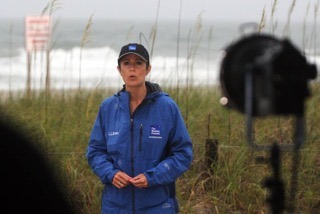
The Weather Channel crunches 700,000 forecasts a second and already sells such data to customers. Photo: Mike Spencer/Wilmington Star-News/Associated Press

By

Don Clark

March 31, 2015 12:01 a.m. ET

International Business Machines Corp. plans to invest $3 billion over four years on a new business helping customers gather and analyze the flood of data from sensor-equipped devices and smartphones.

And perhaps we will have some data, not subject to climate Believer vs., Denier selection.

clip_image001[4]

Suiting Up for the Moon

http://apod.nasa.gov/apod/ap150401.html

Ed

clip_image001[5]

Hyundai pushes for commercial self-driving cars by 2020

Dr. Pournelle,

No thanks. I’ll keep my dumb car. The more gadgets there are, the more things to go wrong. I’m terrified that someone will upload a virus into all these “smart cars” and cause a traffic collision that the Almighty couldn’t untangle.

Let’s stay with dumb cars, even if some of them are driven by dumb people.  There’s a limit to the damage this can cause.

Terrier1

And yet statistics show fewer accidents with robot than human drivers. Admittedly there are not much data. But there are models, and we trust climate models do we not?

clip_image001[6]

Amazon Wants to Be Your Home Services Middleman (WSJ)

  • (journal)

Amazon.com AMZN +0.70% is extending nationwide an offering that connects shoppers with local service providers, including Dish satellite-television service, Pep Boys auto-parts stores and handyman marketplace TaskRabbit.

The initiative, known as “Home Services,” is Amazon’s latest effort aimed at ensuring the e-commerce giant’s customers never have a reason to leave its site.

Amazon has been testing the service, which helps connect customers with professionals like electricians and yoga instructors, since the fall in New York, Los Angeles and Seattle.

clip_image001[6]

Use a ‘Fake’ Location to Get Cheaper Plane Tickets (Time)

I can’t explain airline pricing but I do know some plane tickets can be cheaper depending on where you buy them or, even better, where you appear to buy them from. This is all about leveraging foreign currencies and points-of-sale to your advantage.

For reasons I never quite understood, every time I tried to book a domestic flight in another country, the prices were always exorbitant. But, say, once I was in Bangkok, that same flight that was once $300 would fall to $30 almost inexplicably. This phenomenon is because a ticket’s point-of-sale—the place where a retail transaction is completed—can affect the price of any flight with an international component.

Most people don’t know there is a simple trick for “changing” this to get a cheaper flight on an airline’s website; it’s how I managed to pay $371 for a flight from New York to Colombia instead of $500+. Though it can be used for normal international flights, it often works best when you’re buying domestic flights in another country. (Point in case: A Chilean friend once told me Easter Island flights were much cheaper to buy in Santiago instead of abroad.)

clip_image001[7]

macs vs. pc’s: the eternal question

Ah yes, the eternal question of Macs vs. PCs. It’s kind of like the Sunni/Shia divide in Islam, but with less bloodshed (but no less argument!)
Granted I think the world is becoming more OS agnostic. I run browsers, MS Word, and Matlab, and that’s it. So the OS doesn’t really matter. (If only Google Chrome ran Matlab¦).
Sure windows gives you more hardware choice. Granted. But one major difference: macs don’t come with ‘crapware’, windows pcs do. Sure, you can buy ‘signature’ windows machines direct from MS (!!!! why can’t I buy these direct from Dell or whatever! I’d pay $50 for a cleaner optimized system no hesitation). But given how valuable my time is, I like the idea that when I start a mac it comes already tuned to top performance – a windows machine, not so much. That $1500 mac laptop is almost free when I have used it steadily for a lot of my work for 6 years¦ If I am going to rely on a tool for a large part of my professional life I just want it to WORK, and paying a little more is not such a big deal.
That said, I still use DOS 6.2 in my lab (an amazingly good RTOS if you disable the clock interrupts! DOS is good. DOS is eternal. Praise be to DOS. You can’t do real time stuff with OSX or Windows or a raspberry pi…). Also the other day I resurrected an old windows 2000 machine because I had some high-performance openGL code on it – and was surprised at how good it was! It zipped along like a greyhound, and compiled C programs in a flash. It was so responsive! Sure, it can’t run modern apps, but progress is not always an unmixed blessing…
I remember once in one of your novels the good guys used machines with the OS burned in ROM with no possible firmware updates to avoid the possibility of corruption… Would that I could find such a rock-solid OS today… I don’t want dancing marshmallows, I just want my machine to do it’s job and not hassle me.

TG

I have about the same sentiments. When I was more active in journalism I had no choice but to keep up with both.  But now I do not have to, and I am more tempted simply to go to Mac; but the Surface tempts me.  Mostly I want to see competition…

clip_image004

Poverty rates near record levels in Bay Area despite hot economy (MN)

By George Avalos

gavalos@bayareanewsgroup.com

POSTED:   04/01/2015 03:19:19 PM PDT

SAN JOSE — Despite being a nationwide leader in job growth, the Bay Area suffers from a poverty rate that still hovers near historic highs, with more than 800,000 people in the region living below the poverty line, a report released on Wednesday shows.

About 11.3 percent of Bay Area residents are living at or below the poverty level, according to the report, “Poverty in the Bay Area,” that was released by the Joint Venture Silicon Valley Institute for Regional Studies. The data reflects levels reached in 2013, the most recent year for which these statistics are available.

“Despite being one of the world’s wealthiest regions, there were 829,547 people living in poverty in the Bay Area in 2013,” the report stated. The study used federal poverty thresholds that ranged from annual income of $11,490 for a one-person household to $23,550 for a family of four.

“The Bay Area has a fast-growing frontier economy that is the starting point for much of the technology created nationwide,” said Jon Haveman, a San Rafael-based economist who prepared the report for Joint Venture Silicon Valley.

That has created some dislocation between those who are riding the innovation-fueled surge of job creation and wage growth, and those who don’t have the skills to keep up. And all of this is happening in a region with runaway housing and rental prices.

“The Bay Area does have something of a have and have-not economy,” Haveman said.

Despite the double-digit poverty levels in the Bay Area, the nine-county region is doing well when compared with trends in California, which has a 16.8 percent poverty rate, and the United States, at 15.8 percent.

San Francisco had the highest poverty level in the Bay Area in 2013 at 13.8 percent, the study found. Alameda County’s poverty rate was 12.9 percent, Contra Costa County was 10.8 percent and Santa Clara County was 10.5 percent. The lowest rate in the nine-county region was San Mateo County at 7.8 percent.

The poverty figures in the Bay Area are below the record level of 12 percent, an ominous benchmark that was reached in 2009 during the Great Recession. Yet the current levels are well above the historic average for Bay Area poverty of 9 percent.

Of course poverty in the US is upper class income in about half the countries of the world…

clip_image004

clip_image004

Freedom is not free. Free men are not equal. Equal men are not free.

clip_image004[1]

clip_image006

clip_image004[2]

Invest in Weather Forecasting; The Drones Are Coming; Buy a Chauffeur With Your Car.

Chaos Manor View Tuesday, March 31, 2015

clip_image001

It is a little past 1600, and Time Warner Internet has stopped working. This is traditional here. Daily, a bit after 1600 PST, my internal nets and Wi-Fi work, but I am not connected to the Internet. This goes on for about an hour, then fixes itself. It started just after the FCC announced it would regulate the Internet in the name of net neutrality. I don’t know how large a region these blackouts cover, and by the time I get past the robots on the telephone it is gone and Time Warner doesn’t acknowledge that they are aware of it. It may not have anything to do with the FCC, but it certainly is possible.

1635 : I just tried the Internet, and it works. So it goes.

clip_image001[1]

I had physical therapy today, and I learned things; but it does take up time. I was going to do an essay on how the new financial attention to weather—all from private capital—is likely to affect climate models; but I don’t have time. Below there are some links to places where you may learn more about where the money is going. It’s worth attention.

Meanwhile, another segment from Another Step Farther Out, a collection of essays and columns from many years ago, alas many still relevant; I had hoped we’d be long past the need of some of the investments I advocated 25 years ago.

THE GAMBLERS

The 1982 meeting of the American Association for the Advancement of Science featured as keynote speaker Dr. George A. Keyworth, Science Advisor to then President Reagan.

Much of what Dr. Keyworth said made sense. We must, he said, cut back; be selective. The days of “As long as you’re up, get me a grant” are over. We shall rigorously pursue excellence—

I’d have been more impressed if he hadn’t, in the same speech, made it pretty clear that they’re cutting back the planetary exploration program. If you want excellence, what’s better?

He did announce that they’ve no intention of saving money by turning off the Deep Space Net; they’ll be listening to Voyager when it gets to Uranus. The rest of the planetary program, however, is in trouble.

So is space investment. The Citizen’s Advisory Council has shown that every year for a decade we have seriously underestimated the requirements for capability to put payloads in orbit. This includes all requirements: civil, scientific, environmental (such as weather and pollution monitoring), and communications. Yet with all the evidence staring them in the face, the administration has not made any commitment to great expansion of our space access capability.

That’s the space front. And if anything, in the last ten years, it has gotten worse. We’re not doing so much on the rest of the high technology front, either. Why?

One problem, I think, is that we have so many economists pretending they know something. Perhaps one or two do. Perhaps. But no two of them seem to make the same recommendations, and most of them ignore what seems so obvious that I suppose you have to earn a Ph.D. before you can’t see it.

I once heard John Kenneth Galbraith and Arthur Laffer, the champions of liberal and conservative economics, debate for a full two hours on the subject of why the ’60s were so good and the ’70s so bad; and in all that time, neither mentioned the words “research,” “development,” “space,” or “technology.”

Yet it seems clear: if you’ve got to spend more than you make, you’d better do some investing, and fast. You might also want to gamble.

If a family can see that over the next five years they’ve no choice but to spend money that won’t be coming in, they’ve got some decisions to make. Perhaps a second job, or a new source of income; but suppose there aren’t any.

Sell something? But if there’s nothing to sell? Cut expenses? Perhaps, although if the expenses are taxes that’s not going to work either. And governments, it seems, can’t cut expenses. Reagan’s “cuts” were only a slowdown of increases; the 1983 budget was considerably larger (in real dollars) than was the 1982 budget. So while we talk of budget cuts, we don’t mean it, and I don’t suppose we ever will.

Then what’s left? In the case of a family, it’s obvious. Speculative investments. If you’re going to go broke anyway, take a high flyer and the worst that happens is you’re bankrupt sooner; at best you make enough to keep going.

Return now the U.S.: we have an aging work force. It is absolutely predictable that in a few years there are going to be more people retired and fewer able to work; and somebody’s got to support the retired. They’re voters, you know, and they’ll be organized.

Project this scenario ahead twenty years and you can scare yourself; yet I think of no single institution, none whatever, that can and will do anything about it. All parts of our government operate on a much shorter time frame. If we had one hereditary house in Congress—heresy as it is to say—we’d at least have an institution that worried about the next decade, since its members know they’d still be there to face the problems. They might also be concerned about their children.

But we have no such institution in government, and now that the family has become relatively unimportant we don’t have many private ones to look that far ahead either.

Does this mean we’re doomed?

I don’t know. It’s sure a hell of a challenge.

How, then, can we prevent our children from cursing our memory?

The best way, it seems to me, is investment: to do what Keyworth said the administration wants to do, but do it in a big way. Look: we’re facing bankruptcy. They keep projecting federal deficits larger than the whole budget was during the Johnson administration. The remedy, some say, is to raise taxes, but we all know that’s asinine. All higher taxes do is stimulate people to spend effort on tax avoidance rather than wealth creation. Right now we have teams of the brightest people in the nation working for the IRS, and other equally competent teams working for their victims; the vector sum of their activity is zero. How is the Republic well served by this?

No: if we’re headed for bankruptcy, we’d as well be hung for sheeps as lambs. You’re going to have deficits? Pity; but if so, take some of it and invest. Back long shots. Like space industries. Lunar colonies. Heave money at the universities. Change tax laws to provide really heavy incentives for industry to do basic R&D.

What you’re praying for is a breakthrough: some way to change the very rules of the game. That’s happened often enough in history, although seldom in response to deliberate stimulation; but what the hell, we’re desperate, or should be.

And I mean that: we should be in a state of near panic just now. How can you look into the future and be anything but scared? The work force gets older. Our machines get older. Our taxes get higher, and our savings get lower. More and more people become concerned with “survival;” the underground economy is the only thing that’s booming (and what a marvelous thing that is! We get surgeons out painting their own houses, because it’s cheaper than hiring it done. A real accomplishment). We ought to be scared stiff.

Now maybe, just maybe my colleague Harry Stine is right: that without any government investments the capital for space development will be forthcoming from the private sector; the Third Industrial Revolution will proceed apace, without stimulation form Washington. Maybe. I hope so. But I don’t see many signs of it.

I see no real reasons to revise that in 2015.

Subject: Amazon DASH is Jeff Bezos’ latest “I want it now” convenience stratagem – a “Free” IoT “reorder anything” thingy

Amazon DASH is Jeff Bezos’ latest “I want it now” convenience stratagem! https://www.amazon.com/oc/dash-button?reqInv=1 A Wi-Fi immediate order IoT Thingy! Free to Prime members by priority request. The FAA cannot delay THIS one….

: Richard Doherty

clip_image001[3]

AT&T launches ultrafast Internet service in Cupertino (MN)

By Troy Wolverton

twolverton@mercurynews.com

POSTED:   03/30/2015 11:26:25 AM PDT

CUPERTINO — AT&T on Monday announced that it has launched its new super-high-speed Internet service in Cupertino.

Residents in certain areas of the city can now sign up for the service, dubbed GigaPower, which can deliver speeds of up to 1 gigabit per second. That’s nearly seven times faster than the fastest broadband service Comcast offers in the area and more than 20 times faster than the speediest service AT&T commonly offered in the area previously.

“We’re thrilled to be the first city on the West Coast to get GigaPower,” Cupertino Mayor Rod Sinks said at a news conference here.

For Cupertino, the launch is something of a redemption. The city had hoped to be among the first communities to get the competing Google Fiber service, but its application was rejected by the search giant.

AT&T is offering GigaPower by installing fiber optic data cables directly to customers’ houses. Fiber optic cables have the capability to deliver far more bandwidth than either the copper cables used by AT&T and other phone companies to deliver traditional phone service and older DSL-based Internet service or the coaxial cables used to deliver Comcast’s broadband service.

With gigabit Internet service, AT&T estimates that consumers could download an HD movie in about 36 seconds.

But that service won’t come cheap. AT&T will charge $110 a month for stand-alone 1-gigabit Internet service. The company will charge $180 a month for triple-play service, with unlimited calling, pay TV service and 1-gigabit broadband. Those prices are only guaranteed for a year and two years, respectively, and may rise after that.

Even if they don’t, they arguably understate the actual cost of the service. As part of receiving the GigaPower service at those prices, customers must agree to allow AT&T to track their online activities for the purpose of marketing products to them, something they typically don’t have to agree to with other broadband service agreements. If customers choose to opt out of that tracking, they would pay additional $29 a month for each package of services.

By contrast, Comcast charges $115 for its 150-megabit per second Internet service, but only $50 a month for its 105-megabit per second one. Comcast charges a promotional rate of about $140 a month for a triple-play bundle including 105 megabit per second broadband.

It’s also unclear just who in Cupertino will be able to receive the GigaPower service. At launch, the service is available at “several thousand” homes in the city, said Terry Stenzel, vice president and general manager of the Northern California and Reno region for AT&T. But Stenzel declined to give an exact number or to say what percentage of homes or what areas in the city have access to the service, citing competitive reasons. According to the 2010 census, Cupertino had about 20,000 households.

“They’re unwilling to tell anybody. Not even me,” said Mayor Sinks.

Cupertino doesn’t have any commitment from AT&T to offer service to all areas of the city or to bring service to government buildings, schools or hospitals, Sinks said.

“They’ve stopped short of any commitment on that,” he said.

AT&T plans to expand the service in the city “every week,” said Stenzel. But he added that the timing of when the company will offer service to additional residents depends on customer demand, the time it takes to get permits for the work and other factors.

While AT&T is exploring offering GigaPower in other Bay Area cities, the company hasn’t announced plans in any particular one. The timing depends in part on the permitting process, which can vary from city to city, said Ken McNeely, president of AT&T’s California operations.

Picture of the future? How many years before we all have it? In 1990 you had to be near the backbone to get high speed access, and that last 1000 feet was expensive, This is 2015. If we are here in 15 years…

clip_image001[4]

Crop forecasting (to predict the futures market) is big business.  Satellites changed that profession enormously, from the early days of Earthsat http://en.wikipedia.org/wiki/EarthSat (SF writer Charles Sheffield, Ph.D. VP Technology)  to the present.  Now here come the drones:

http://www.washingtonpost.com/blogs/innovations/wp/2015/03/31/how-dronedeploys-app-is-about-to-make-farming-more-efficient/

How DroneDeploy’s app is about to make farming more efficient (WP)

By Matt McFarland March 31 at 7:30 AM

DroneDeploy, a start-up poised to make farms and other businesses significantly more efficient, launched its mobile app Tuesday and announced it will be compatible with one of the world’s most popular drones.

DroneDeploy’s software, which automates drone flights, crunches the data and quickly provides it in a useful manner, will work on DJI’s Phantom 2 Vision +. DroneDeploy’s secret sauce is its ability to take the pain and hassle out of operating a drone for commercial use.

“Farmers can fly the field at 11 o’clock in the morning, and after lunch be applying chemicals with pinpoint accuracy,” said Bret Chilcott, founder of AgEagle, which makes drones for the agricultural industry. “What that does is it saves the farmer a ton of money. Chemicals are really expensive.”

He’s been testing DroneDeploy’s software on his drones for about 10 months ahead of Tuesday’s official release, and says he’s found nothing that measures up to it. Chilcott believes DroneDeploy’s dominance could be on a Google or Microsoft type level.

With DroneDeploy a drone can be easily told to fly on autopilot over a farmer’s fields. Shortly after the drone lands a farmer will already be able to review the maps and data gathered by the drone. With NDVI data, a farmer can what portions of his fields are healthy, and what portions aren’t.

He can then download a geotagged image out of DroneDeploy and upload that into his usual farming software to apply a dose of fertilizer to only the area of his field that is in need.

A farmer will be able to enjoy the utility drones offer without having to learn to fly one, or hire a drone pilot. The only required skill is a familiarity with operating a smartphone or tablet app. DroneDeploy automatically processes in the cloud the data gathered to provide less work to farmers.

“Previously people knew there’s tons of potential with drones, they can do lots of things. But they’re just really hard to start using because they’re so complicated,” said DroneDeploy chief executive Mike Winn. “Anyone knows how to push a button on a screen. With our product you don’t need to use multiple devices and multiple pieces of software.”

DroneDeploy says its app will be available for $99 a month. Its audience is strictly commercial. For farmers look to cut down on their chemical or water bills, that $99 could go a long way.

Winn sees the biggest opportunity for DroneDeploy now in agriculture, but other potential uses could include monitoring quarries and construction sites and taking real estate photography videos.

DroneDeploy also announced Tuesday it has raised $9 million in Series A funding, which was led by Emergence Capital. Kevin Spain will be joining its board of directors. Winn wanted to work with Emergence Capital because of its experience with enterprise cloud companies.

DroneDeploy currently has 12 employees and that figure should grow. Its three founders are South African, and two have PhDs in machine learning.

The app can be downloaded on iOS and Android devices.

Needless to say, crop forecasting is now much more efficient…

clip_image001[5]

All this attention to weather should affect “climate” models:

IBM Scores Weather Data Deal and Starts Internet of Things Unit    nyt

By Steve Lohr

March 31, 2015 12:01 am March 31, 2015 12:01 am

Data partnerships are a key ingredient in IBM’s long-term strategy, and the company is announcing a big one on Tuesday with the Weather Company.

For IBM, the deal represents another close link with a leading data supplier for special access and joint development. Last fall, it forged a similar arrangement with Twitter, the social network, whose tweets of 140 characters or fewer are a global wellspring of consumer sentiment.

IBM also said that it planned to invest $3 billion in the next four years to build up an Internet of Things business group. The two announcements are related since so much of the new data that corporations want to analyze to spot ways to increase sales and cut costs will increasingly come from Internet-connected devices, from smartphones to sensors.

The Weather Company is best known for its media properties like the Weather Channel and weather.com, but it is also a data heavyweight, gulping up 20 terabytes daily from weather stations, radar, satellites and small sensors. Its data powers the weather apps for Apple, Google, Microsoft and others. It also sells its weather data to thousands of companies, including airlines, retailers and insurers, and the unit that sells that information, WSI, is the company’s fastest-growing business.

“Google mapped the earth and we map the atmosphere,” said David Kenny, chief executive of the Weather Company.

To IBM, weather data is an indispensable asset. But it is a raw material to be fed through Watson, IBM’s artificial intelligence engine, and the company’s other analysis tools. The goal, said Robert Picciano, senior vice president for analytics, is to deliver a “new service for business, detailed weather information and insights for decision-making.”

The IBM-Weather Company announcement, said Frank Gens, chief analyst at the research firm IDC, is part of a larger trend of major tech companies trying to enhance their cloud-based technology with data for businesses and developers. “Amazon, Microsoft, Google, Oracle and others are all trying to pull in as many interesting data sources as they can,” Mr. Gens said.

In this deal, IBM got a win for its cloud business. The Weather Company had relied mainly on Amazon Web Services for its cloud computing, but for its business data service it will use IBM’s SoftLayer cloud technology.

To date, the Weather Company has sold its data mostly to companies, though it has jointly developed applications for specific industries, notably commercial airlines. For the airline industry, Mr. Kenny said, the company focused on using real-time weather data and sensor data on aircraft to help reduce turbulence in flights by as much as 70 percent. Beyond passenger comfort and satisfaction, turbulence consumes extra fuel and adds to wear and tear on planes, adding to downtime on the ground.

With real-time data, flight paths can often be altered to reduce turbulence. Mr. Kenny pointed to that as an example of the kind of improvement that weather data can make when combined with other information. The partnership with IBM, he said, should add more “science to what we can do. We’re going from data to decisions.”

One likely application, IBM said, was in auto insurance. Insurers pay more than $1 billion in claims in the United States for cars and trucks damaged by hail. Adding Watson analysis to WSI’s weather data, the company said, could enable insurers to send text-message alerts to policyholders, warning them of an imminent hailstorm and advising them of safe locations nearby. Such a service, IBM calculates, has the potential to save insurers up to $25 per policyholder in hail-prone regions, or millions of dollars a year.

How IBM and The Weather Channel’s new deal can save you money (Fortune)

It’s all about helping businesses make smarter decisions

IBM and The Weather Channel are partnering to help businesses make better decisions around weather patterns, the companies announced Tuesday. The move signals a commitment by IBM to broaden its offerings as it focuses on new projects, especially after a year with rocky financials and a “disappointing” outlook for 2015.

“Weather is perhaps the single largest external swing factor in business performance – responsible for an annual economic impact of nearly half a trillion dollars in the U.S. alone,” according to IBM. The company said that it will be able to use cloud computing to process data collected data from “more than 100,000 weather sensors and aircraft, millions of smartphones, buildings and even moving vehicles.”

Among the firms that IBM says could benefit from the new Weather Channel partnership are insurance companies, which could use Big Blue’s data to save money by halting operations or change their offerings based on weather forecasts. Here’s IBM’s release:

Insurers pay more than $1 billion in claims every year for vehicles damaged by hail. WSI’s Weather Alert service, together with IBM Analytics, enables insurance providers to send policyholders text messages that alert them to impending hailstorms – and safe locations – so vehicles can be moved before damage occurs. These insights have the potential to save insurers up to $25 per policyholder per year in hail-prone areas, or millions of dollars annually.

The move comes as IBM also announced a $3 billion investment in a new Internet of Things unit, Fortune reported.

In January, IBM reported fourth-quarter earnings of $5.81 per share, which exceeded analysts’ expectations. That figure, however, was down 6% from the previous year.

The cloud for clouds: IBM and The Weather Company work on big data weather forecasts (ZD)

Summary:Big data and Internet of Things to improve weather forecasting.

By Colin Barker | March 31, 2015 — 13:48 GMT (06:48 PDT)

IBM and The Weather Company want to use big data, the cloud, and the Internet of Things to improve weather forecasting for businesses.

As part of a new deal between the companies, The Weather Company will shift its massive weather data services platform to the IBM Cloud and integrate its data with IBM analytics and cloud services.

The deal reflects how competition in the cloud market is heating up too: The Weather Company is a close partner with Amazon Web Services (AWS) and Bryson Koehler, the CIO/CTO for The Weather Company, told ZDNet: “I believe in the multi-cloud story and believe that any serious cloud-based business or application needs to be built in a cloud-agnostic way.”

The Weather Company, he said, “has been on that journey for the last three years and that’s what has enabled us to deploy our Data Services Platform onto IBM SoftLayer so we can power our business and strategic opportunities with IBM beyond what we could do with AWS alone”.

As IBM points out, weather is the single largest external variable in business performance – responsible for “an annual economic impact of nearly half a trillion dollars in the US alone”.

But one of the big issues, according to IBM, is that while weather prediction is getting more precise and granular all the time – thanks to bigger and better computers and better software – business systems “generally assume every day is the same”. The result is that knowledge of impending extreme weather disruptions “don’t always trigger operational responses”.

IBM and The Weather Company think the combination of traditional business data, such as weather information, and what the companies call the “unprecedented number of Internet of Things (IoT) enabled systems and devices” is going to transform enterprise decision-making in a fundamental way.

The IBM/The Weather Channel partnership is part of a $3 billion investment IBM is making in the IoT and cloud services as a whole, the company said in a statement.

A multitude of sensors

The combination of the IoT and cloud computing will enable more than 100,000 weather sensors and aircraft along will “millions of smartphones, buildings and even moving vehicles” to combine information. WSI, The Weather Company’s parent, will process data from thousands of sources, the companies said, resulting in approximately 2.2 billion unique forecast points worldwide. The WSI “averages more than 10 billion forecasts a day on active weather days”.

By migrating its weather data platform to IBM Cloud, WSI hopes to be able to speed the growth of what is believes is “one of the largest cloud-based applications in the world”.

IBM and WSI/The Weather Company will aims to deliver cloud services in three areas:

Watson Analytics for Weather: IBM and WSI aims to enable the integration of historical and real-time weather data in business operations and decision making with IBM analytics platforms such as Watson Analytics. The companies said they will jointly develop industry solutions for insurance, energy & utilities, retail and logistics.

Cloud and Mobile App Developer Tools: Entrepreneurs and software developers will be able to build mobile and web apps that use WSI data combined with data from operational systems, connected devices and sensors using advanced analytics through IBM’s cloud application development platform, Bluemix.

Business and Operational Weather Expertise: Consultants from IBM Global Business Services will be trained to combine WSI data with other sources to help interpret “industry pain points”, the companies said, and provide new insights to help solve business problems.

The aim is to combine IBM’s cloud computing, consulting, and analytics experience with WSI’s weather data and forecasts so that industries can hopefully have better weather prediction, the companies said.

Some of the examples IBM and and WSI use include:

Insurance: A simple weather issue like hail carries a fairly hefty cost. Insurers pay more than $1 billion in claims every year for vehicles damaged by hail but WSI’s Weather Alert service, together with IBM Analytics, can help insurance providers by enabling them to send policyholders text messages that alert them to impending hailstorms – and safe locations – so vehicles can be moved before damage occurs. These insights have the potential to save insurers up to $25 per policyholder per year in hail-prone areas, which adds up to millions of dollars annually, IBM said in a statement.

Retail: Each winter, retailers in snowy areas see patterns in which storm forecasts drive spikes in sales of goods and tools such as groceries, shovels, sand, salt and cold-weather gear. At the same time as the retailers are laying out for extra sales, these same events typically hamper retail sales as consumers stay inside. The differences can be profound – during the January 2014 polar vortex in the US, areas with greater than 10°F/12.2C drops in temperature saw sales fall 15.5 percent while areas with a less than 10°F/12.2C drop saw sales fall only 2.9 percent. The ability to better understand and predict the impact of such weather events allows retailers to adjust staffing and supply chain strategies as needed – regionally and nationwide.

Utilities: Utility companies in the US feel the impact of an increase in temperature and relative humidity dramatically in air conditioning use and power consumption. The difference between 90 and 95 degrees in Texas, for example, can equate to $24 million more in electricity spending per day. With IBM and WSI, utilities should be able to more accurately predict power consumption so they can avoid overproducing power, reduce service interruptions and better serve customers, the companies said.

David Kenny, chairman and CEO of The Weather Company, claimed that the agreement between The Weather Company and IBM was, “a watershed moment for businesses that have long been impacted by weather but haven’t had the rich data or enhanced decision-making ability to drive positive business outcomes”.

http://www.zdnet.com/article/ibm-creates-internet-of-things-division/

IBM creates Internet of things division, lands Weather Company cloud deal (ZD)

Summary:IBM formalizes its focus on the Internet of things as it faces competition from traditional tech rivals as well as companies such as General Electric.

By Larry Dignan for Between the Lines | March 31, 2015 — 04:01 GMT (21:01 PDT)

IBM on Tuesday said that it will create a new Internet of things unit and invest $3 billion over four years to build it out.

The move formalizes IBM’s existing Internet of things efforts. IBM’s smarter planet and smarter cities businesses are connected to the Internet of things trend. The rough idea behind the Internet of things is that sensors will be embedded in everything and networked to create data. This flow of data could improve operations.

For IBM, the formation of the Internet of things unit follows a familiar playbook. IBM targets a high value growth area, invests at least a $1 billion to get the effort rolling and throws its hardware, software and consultants at the issue. In this respect, the formation of the Internet of things unit rhymes with what IBM did with e-commerce, analytics, cloud and cognitive computing.

IBM faces a fierce battle for enterprise Internet of things (IoT) business. Cisco has targeted IoT as has almost every tech vendor.

Meanwhile, non-traditional IBM rivals have strong IoT efforts. For instance, General Electric, which happens to make many of the things that will be networked, has an IoT platform called Predix. GE has invested $1 billion in industrial software development. Although GE calls the Internet of things the industrial Internet, the concept of networking things and layering analytics on top is the same.

For IBM’s part, the company said it will have more than 2,000 consultants, researchers and developers aimed at IoT and the analytics that goes with it. IBM said the unit will include:

A cloud platform for industries aimed at verticals. IBM will offer dynamic pricing models and cloud delivery to various verticals.

Bluemix IoT platform as a service so developers can create and deploy applications for asset tracking, facilities management and engineering tools.

An ecosystem of partners ranging from AT&T to ARM to The Weather Company.

Separately, IBM announced a partnership with the business-to-business division of The Weather Company, owner of The Weather Channel. The partnership will deliver micro weather forecasts using sensors from aircraft, drones, buildings and smartphones.

The Weather Company will also move its data services platform to IBM’s cloud platform and integrate Big Blue’s analytics tools such as Watson Analytics. The Weather Company had been an Amazon Web Services reference customer. It’s unclear whether The Weather Company will still use AWS given the IBM pact.

Based on The Weather Company’s cloud architecture it’s possible that IBM will be one additional cloud in addition to AWS, Google and Verizon’s Terremark.

Here’s that architecture from an AWS re:Invent presentation.

To be sure, IBM has a bevy of IoT projects underway with customers. The new unit will hone and focus those efforts while bringing in IBM’s expertise in analytics.

clip_image001[6]

clip_image003

Freedom is not free. Free men are not equal. Equal men are not free.

clip_image003[1]

clip_image005

clip_image003[2]

Another Step Farther Out; Priorities; Moore’s Law Continues; and other matters.

Chaos Manor View Monday, March 30, 2015

clip_image001

Eric has got a publishable manuscript of Another Step Farther Out, a compendium of Galaxy, InfoWorld, New Destinies, scientific magazines, and other places where I published in the old days. You’d think it ought to be dull, but it isn’t, and I’m working on because I got a lot of it right—we just haven’t done some of that stuff yet. The difference is that when I wrote it we couldn’t quite do it yet; now we can, we just don’t,

One column shows the confusion of climate scientists, divided into “We’re warming!” and “The Ice is coming back!” groups. No Believers and Deniers. Just science. Nut that was before all that money went into building the Warming consensus…

I’ll have to write some comments one where I got it wrong, but the horror is that I got a lot right, and we still aren’t doing it.

clip_image001[1]

I’m still experimenting with the Surface, and I still have to update a lot of the Apple equipment; stand by; but Another Step is still important, more than I thought, so it gets moved up a few notches. I’m also moving 2020 Visions up a bit in importance. That’s a lot to do, and I don’t work as fast as I used to, but we keep going, thanks to Eric and Peter and Rick and Brian and Alex and Dan and my other hard working advisors. And the readers: I still say I have the most interesting mail of anyone I know.

From Another Step Farther Out:

THE STUDY SYNDROME

Lincoln, Nebraska doesn’t sound like much of a place for changing human destiny, even though it is said to have the highest “quality of life” in the U.S. It’s a nice little city with a good convention center, where, this spring, a very important event took place.

A five day formal report by the Department of Energy and NASA on the Solar Power Satellite (SSPS) concept. That should have changed the world.

In the late seventies, Stefan Possony and I presented a paper at the annual meeting of the American Association for the Advancement of Science. We tried, successfully I think, to show that there are very good reasons to believe the human race will be around for 100 billion years.

Roll that number around on your tongue a bit. One hundred billion years. That is our future. Compared to it, our past is minuscule, vanishing, a tiny drop in the bucket. We are so very young and so much lies ahead of us, our only certain doom is the end of the universe-and who knows, after a hundred billion years, perhaps we will know how to prevent that too. It may be as a species we have no inevitable doom; certainly 100 billion years is, for those of us her and now, close enough to eternity.

But to realize anything like the potential, we must outlive our planet. We must outlive our sun. Eventually we will outlive our galaxy.

None of this is impossible. We can today conceive of interstellar ships, although it will be some time before we can build them; meanwhile, the first step is within our grasp right now. We can, if we will, make our home not Only One Earth, but in the solar system at large. In this generation, in this decade, we could put a settlement on the moon. Not a base, or an outpost; but a settlement, a colony; a home. We know how to do this now, with today’s technology, for about what we spend on cosmetics, less than we spend on tobacco.

It is an idea whose time has come; and SSPS gives us another reason to start.

clip_image001[2]

Voices: A peek into the future of tech (USA Today)

Rick Jervis, USA TODAY 9:05 a.m. EDT March 29, 2015

MIAMI — Anyone interested in what the dot.com future may hold would have done well by strolling through the second floor of the InterContinental Hotel here recently.

There, mingling between the Disney World display and the CNN en Español booth, they would have found an intriguing mix of media titans, marketing gurus, start-up entrepreneurs and YouTube careerists — all part of and aimed at the country’s burgeoning Latino population.

They were there as part of Hispanicize 2015, an annual gathering of the nation’s top Latino media execs, journalists and new-media entrepreneurs for a week of workshops, networking and parties. I was invited to the conference to speak on a panel on race and media.

A few days prior, I had covered the SXSW Interactive conference in Austin. It was interesting traveling from SXSW, one of the premier tech gatherings in the country but one still struggling to be more diverse, to a similar, albeit smaller, gathering of techies flush with diversity. Hispanicize, in fact, is often referred to as the “Latino SXSW.”

In Austin, panel discussions explored the myriad reasons Silicon Valley firms — especially at the managerial level — aren’t more black, brown and female. In Miami, those very diverse faces that have eluded the upper echelons of Yahoo and Facebook shared ideas and unfurled their cyber strategies.

Hispanics make up just 4% of managerial positions at Yahoo and even fewer at Facebook and Google. That number drops even further for African Americans. Black and Hispanic professionals — such as lawyers, accountants and computer scientists — make up 5% of all professionals at Facebook, Google and Yahoo but 13% of similar professionals nationwide.

Meanwhile, Latinos are the nation’s largest minority, numbering 53 million in the USA, and its fastest growing. By 2060, they’re expected to make up one-third of the total population, with more than $1 trillion in spending power.

Attendees at Hispanicize didn’t seem overly concerned with those disparate stats. They appeared less anxious about climbing corporate ladders at Silicon Valley and more focused on starting their own empires.

Hispanicize is the brainchild of Manny Ruiz, whom I knew from our days working at the campus newspaper at Miami-Dade Community College two decades ago. Ruiz left journalism to start a Hispanic-focused public relations firm, sold that and used the proceeds to launch Hispanicize. The gathering has grown from 260 attendees at its inaugural event five years ago to more than 2,000 today.

“We’re in a new era where there’s so much opportunity for everyone,” Ruiz told me. “You don’t have to be in Silicon Valley anymore to succeed.”

It was a mantra repeated throughout the conference. Entrepreneurs shared stores of how they’ve cobbled careers out of blogs and YouTube channels with names like Rocking Mama and Crafty Chica, drawing hundreds of thousands of loyal online followers and the attention of major brands willing to pay handsomely for that coveted audience. There was very little talk of trying to break into Google.

Alejandra Ayala, 29, started her fashion/beauty blog and YouTube channel, known as Chulavision, two years ago. She began in English, with just 1,200 subscribers. But when Ayala, who’s Mexican-American, started posting videos in Spanish, her channel quickly swelled to 123,000 subscribers. Her YouTube channel has since captured 5 million views.

Ayala said she doesn’t know how far she’ll take her project. But the fact that brands are reaching out to her tells her something about the direction of online enterprises.

“Slowly, they’re starting to notice us,” Ayala said about both her loyal following and corporations willing to pay for a few seconds of their time. “They’re starting to realize the impact we can have.”

Asked about the lack of diversity in Silicon Valley, Ayala smiled.

“If someone doesn’t want to give it to us,” she said, “we’re going to find a way to get it.”

An interesting attitude…

clip_image001[3]

Windows 10 Or OS X: Can Hardware Make The Difference? (Forbes)

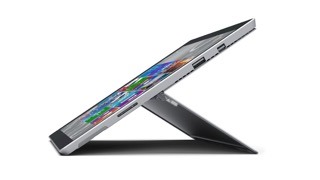
clip_image002The Surface Pro 3 is a design you won’t get from Apple.

Would you switch from Mac to Windows to get access to “better” hardware?

I resolved that dilemma long ago by becoming, more or less, operating system agnostic.

There is one stubborn, undeniable fact in favor of being agnostic: One side offers more choice. That would be Windows, of course. And that means that there are sometimes better hardware options. And with Windows 10 on the horizon, that becomes even more enticing.

Lots of businesses are already agnostic, i.e., either Macs or PCs are allowed.  Though that doesn’t necessarily favor Windows PCs (BYOD — Bring Your Own Device — policies are trending to non-Windows platforms), I’ve been moving in the other direction.

Barring job-specific platform requirements, the experience on Macs and PCs is increasingly the same for me.  Particularly, if you spend much of your time inside Google’s GOOGL+0.2% Chrome browser, which I do.

(And the virus or malware argument against Windows isn’t that convincing anymore after both my MacBook and a friend’s recently got slammed with nasty malware.)

Let’s look briefly at laptops: On the Mac side, you’ve essentially got the MacBook Air, MacBook Pro, and the new 2-pound MacBook. Good choices but limited. While on Windows it’s almost limitless, if you throw in third-tier suppliers and the white box crowd.

But that’s stating a well-known fact, which is not my point.  What I’m getting at are unique products from top-tier suppliers that, because of the design, pull you off the Mac and over to Windows.

There’s a good bit to discuss in that.

clip_image001[4]

http://www.eetimes.com/document.asp?doc_id=1326149&print=yes

How Will Deep Learning Change SoCs? (EE Times)

Junko Yoshida

3/30/2015 00:00 AM EDT

MADISON, Wis. – Deep Learning is already changing the way computers see, hear and identify objects in the real world.

However, the bigger — and perhaps more pertinent — issues for the semiconductor industry are: Will “deep learning” ever migrate into smartphones, wearable devices, or the tiny computer vision SoCs used in highly automated cars? Has anybody come up with SoC architecture optimized for neural networks? If so, what does it look like?

“There is no question that deep learning is a game-changer,” said Jeff Bier, a founder of the Embedded Vision Alliance. In computer vision, for example, deep learning is very powerful. “The caveat is that it’s still an empirical field. People are trying different things,” he said.

There’s ample evidence to support chip vendors’ growing enthusiasm for deep learning, and more specifically, convolutional neural networks (CNN). CNN are widely used models for image and video recognition.

Earlier this month, Qualcomm introduced its “Zeroth platform,” a cognitive-capable platform that’s said to “mimic the brain.” It will be used for future mobile chips, including its forthcoming Snapdragon 820, according to Qualcomm.

Cognivue is another company vocal about deep learning. The company claims that its new embedded vision SoC architecture, called Opus, will take advantage of deep learning advancements to increase detection rates dramatically. Cognivue is collaborating with the University of Ottawa.

If presentations at Nvidia’s recent GPU Technology Conference (GTC) were any indication, you get the picture that Nvidia is banking on the all aspects of deep learning in which GPU holds the key.

China’s Baidu, a giant in search technology, has been training deep neural network models to recognize general classes of objects at data centers. It plans to move such models into embedded systems.

Zeroing in on this topic during a recent interview with EE Times, Ren Wu, a distinguished scientist at Baidu’s Institute of Deep Learning, said, “Consider the dramatic increase of smartphones’ processing power. Super intelligent models—extracted from the deep learning at data centers – can be running inside our handset.”  A handset so equipped can run models in place without having to send and retrieve data from the cloud. Wu, however, added, “The biggest challenge is if we can do it at very low power.

AI to Deep learning

One thing is clear. Gone are the frustration and disillusion over artificial intelligence (AI) that marked the late 1980’s and early ‘90’s. In the new “big data” era, larger sets of massive data and powerful computing have combined to train neural networks to distinguish objects. Deep learning is now considered a new field moving toward AI.

There’s a lot more, worth your attention. AI is coming; as Minsky says, when you get it, they say, well that wasn’t Artificial Intelligence at all…

http://www.zdnet.com/article/new-3d-nand-flash-memory-from-intel-micron-could-result-in-10-terabyte-ssds/

New 3D NAND flash memory from Intel, Micron could result in 10-terabyte SSDs (ZD)

Summary:The two companies claim their new technology offers up to three times the density of other 3D NAND competitors, with full production ramping up later this year.

By Sean Portnoy for Laptops & Desktops | March 30, 2015 — 13:07 GMT (06:07 PDT)

NAND flash memory isn’t the type of technology that might get your heart racing, but breakthroughs in making solid-state storage denser means more storage can be squeezed into ever-smaller spaces. While Samsung has been the company most associated with making 3D NAND technology the latest trend in flash memory, longtime partners Intel and Micron have just announced the results of their collaboration that could yield equally impressive results.

As the term suggests, 3D NAND adds a new dimension to producing flash modules. By stacking cells vertically, density is improved, which allows for more capacity in the same dimensions. Intel and Micron have further refined this process by using a floating gate cell for the first time in 3D NAND production.

Moore’s Law isn’t dead yet…

Researchers Claim 44x Power Cuts (EE Times)

New on/off transceivers reduce power 80%

R. Colin Johnson

3/30/2015 00:01 AM EDT

PORTLAND, Ore.– Researchers sponsored by the Semiconductor Research Corp. (SRC, Research Triangle Park, N.C.) claim they have extended Moore’s Law by finding a way to cut serial link power by as much as 80 percent. The innovation at the University of Illinois (Urbana) is a new on/off transceiver to be used on chips, between chips, between boards and between servers at data centers.

The team estimates the technique can reduce power up to whopping 44 times for communications, extending Moore’s Law by increasing computational capacity without increasing power. “While this technique isn’t designed to push processors to go faster, it does, in the context of a datacenter, allow for power saved in the link budget to be used elsewhere,” David Yeh, SRC director of Integrated Circuits and Systems Sciences told EETimes.

Today on-chip serial links consume about 20 percent of a microprocessor’s power and about seven percent of the total power budget of a data center. By using transceivers that only consume power when being used, a vast amount can be saved from their standby consumption.

The reason the links are always on today is to maximize speed. The new architecture reduces their power-up time enough to make it worth turning them off when not it use. The team estimates that data centers alone would save $870 million per year by switching to their transceiver architecture.

clip_image001[5]

Surface Pro 3 and Hyper-V

Dear Dr Pournelle,

I have been following your Surface Pro 3 observations with interest, as my Precious arrived last September. It’s the Core i7 model with the 512GB SSD. At the moment I am running Windows 8.1. I love it to bits but I have some observations that may be relevant to the ongoing discussion about waking up from sleep:

I installed Visual Studio 2013 on my Surface Pro 3 and it promptly switched on Hyper-V for Windows Mobile app development. Hyper-V is fantastic on a decently fast desktop PC but it really messes things up on an SP3. Mine really really did not like waking up from sleep and there were many incidents of having to hold the power button and reboot. Eventually I switched off Hyper-V again as I really didn’t need it.

WiFi does my head in. My home network uses an Apple AirPort and a Linksys WRT54GL as access points. The SP3 is unable to reconnect to them from sleep without some encouragement or sitting back and waiting for a few minutes. Newer access points or routers seem fine though, including a NetGear AirCard 762S that I use for 4G internet access on the go. It works a treat for everything I can throw at it, including live video streaming using UStream.

Finally, for those of you who haven’t bought one yet, go for one of the base models. The one I have is super fast but it runs hot and battery life is compromised. On the plus side, it easily replaces a full desktop PC, unless you are a gamer. I use mine for development work, which includes running Android emulators and Ubuntu VMs, all without performance problems.

Best wishes,

Simon Woodworth BSc MSc PhD.

clip_image001[6]

clip_image004

Freedom is not free. Free men are not equal. Equal men are not free.

clip_image004[1]

clip_image006

clip_image004[2]