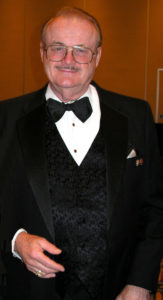
Chaos Manor View, Monday, July 20, 2015
“Throughout history, poverty is the normal condition of man. Advances which permit this norm to be exceeded—here and there, now and then—are the work of an extremely small minority, frequently despised, often condemned, and almost always opposed by all right-thinking people. Whenever this tiny minority is kept from creating, or (as sometimes happens) is driven out of a society, the people then slip back into abject poverty.
“This is known as ‘bad luck’.”
– Robert A. Heinlein

I have installed – well Eric has installed while I watched – a new XBOX ONE in the TV room. At the moment it’s more used to get the TV into my local network than anything else, and I have little experience with it; but we seem to be able to access the web, and my various servers. It’s on HDM2 while the regular TV is HDM1 because I didn’t want the way we use the set to change much, particularly for Roberta; eventually we’ll have integrated it into the system, and we can use voice control. So far I’ve sort of seen the potential but we don’t do that.
Eric’s report will be in Chaos Manor Reviews.
We did test SKYPE. We usually Skype the kids on Sunday, and it’s a problem because Roberta’s machine faces a bright window, so it’s a bit hard for me to get into her office and in the picture with her; but we used Skype on the XBOX now that we have reliable Internet in the back TV room – and it worked splendidly. The camera adjusts to get both of us into the picture, and if we add a third the view expands to include him too. I expect there are apps that will do that for the MacBook Pro or Widows 7 with Logitech Camera that we normally use, but I haven’t seen them.
It probably means that we’ll use it for Skyping with Dr. Jack Cohen next time since it’s easy enough to get three chairs in there, and it’s been hard getting all three of us in the picture using the Mac; although I suspect there is a Mac app that would make it easier. We’ll see. In any event. Look for more about the XBOX One now.
![clip_image002[1]](https://www.jerrypournelle.com/chaosmanor/wp-content/uploads/2015/07/clip_image0021_thumb.gif "clip_image002[1]")
We need a new version of capitalism for the jobless future
By Vivek Wadhwa July 20 at 7:00 AM
http://www.washingtonpost.com/blogs/innovations/wp/2015/07/20/we-need-a-new-version-of-capitalism-for-the-jobless-future/
“There are more net jobs in the world today than ever before, after hundreds of years of technological innovation and hundreds of years of people predicting the death of work. The logic on this topic is crystal clear. Because of that, the contrary view is necessarily religious in nature, and, as we all know, there’s no point in arguing about religion.”
These are the words of tech mogul Marc Andreessen, in an e-mail exchange with me on the effect of advancing technologies on employment. Andreessen steadfastly believes that the same exponential curve that is enabling creation of an era of abundance will create new jobs faster and more broadly than before, and calls my assertions that we are heading into a jobless future a luddite fallacy.
I wish he were right, but he isn’t. And it isn’t a religious debate; it’s a matter of public policy and preparedness. With the technology advances that are presently on the horizon, not only low-skilled jobs are at risk; so are the jobs of knowledge workers. Too much is happening too fast. It will shake up entire industries and eliminate professions. Some new jobs will surely be created, but they will be few. And we won’t be able to retrain the people who lose their jobs, because, as I said to Andreessen, you can train an Andreessen to drive a cab, but you can’t retrain a laid-off cab driver to become an Andreessen. The jobs that will be created will require very specialized skills and higher levels of education — which most people don’t have.
I am optimistic about the future and know that technology will provide society with many benefits. I also realize that millions will face permanent unemployment. I worry that if we keep brushing this issue under the rug, social upheaval will result. We must make the transition easier by providing for those worst affected. In the short term, we will create many new jobs in the United States to build robots and factories and program new computer systems. But the employment boom won’t last long.
Within 10 years, we will see Uber laying off most of its drivers as it switches to self-driving cars; manufacturers will start replacing workers with robots; fast-food restaurants will install fully automated food-preparation systems; artificial intelligence–based systems will start doing the jobs of most office workers in accounting, finance and administration. The same will go for professionals such as paralegals, pharmacists, and customer-support representatives. All of this will occur simultaneously, and the pace will accelerate in the late 2020s.
The article is quite long and quite thoughtful. I recommend it to your attention.
The problem is real: our education is increasingly unable to teach people to do anything that someone else would pay to have done; yet it drives us increasingly into debt, both public debt and saddling the students with lifetime debts. That can’t last, and we all know it.
But the Federal Government is relentless: No child is to be Left Behind, and since in the real world there are only a very few Marc Andreessens there will be unequal results – but inequality is not acceptable in public education. So the smart ones flee to private schools, but if these are not – suitable – to the bureaucracy? Of course the rich will not give up their schools. Perhaps we can make them do it. But the rich can hire armies too. If this sounds a bit familiar, you probably didn’t get history in a public school, where government, we are taught, always produces good results because it has good intentions.
After all, intentions are more important than results… If the Regulators have pure hearts and mean well, surely they will find an answer; can’t leave such things to freedom, no can we?
![clip_image002[2]](https://www.jerrypournelle.com/chaosmanor/wp-content/uploads/2015/07/clip_image0022_thumb.gif "clip_image002[2]")
Apple Hires Auto Industry Veterans
Tech giant has been building a team for an electric-car project
http://www.wsj.com/articles/apple-hires-auto-industry-manufacturing-veteran-1437430826
By
Christina Rogers,
Mike Ramsey and
Daisuke Wakabayashi
Updated July 20, 2015 7:51 p.m. ET
Apple Inc.is recruiting experts from the auto industry, a signal that its efforts to develop an electric car could be gaining ground.
Apple leaps in, but slowly?
![clip_image002[3]](https://www.jerrypournelle.com/chaosmanor/wp-content/uploads/2015/07/clip_image0023_thumb.gif "clip_image002[3]")
Windows 10 Signifies Microsoft’s Shift in Strategy
http://www.nytimes.com/2015/07/20/technology/windows-10-signifies-microsofts-shift-in-strategy.html?_r=0
By NICK WINGFIELDJULY 19, 2015 (nyt)
SEATTLE — Next week, when Microsoft releases Windows 10, the latest version of the company’s operating system, the software will offer a mix of the familiar and new to the people who run earlier versions of it on more than 1.5 billion computers and other devices.
There will be a virtual assistant in the software that keeps track of users’ schedules, and Microsoft will regularly trickle out updates with new features to its users over the Internet. And the Start menu, a fixture of Windows for decades, will make a formal reappearance.
But one of the biggest changes is the price. Microsoft will not charge customers to upgrade Windows on computers, a shift that shows how power dynamics in the tech industry have changed.
The decision to make free a product that once cost $50 to $100 is a sign of how charging consumers for software is going the way of the flip phone. Companies like Google have crept into Microsoft’s business with free software and services subsidized by its huge advertising business, while Apple in recent years has made upgrades to its applications and operating systems free, earning its money instead from hardware sales.
If you have Window 8, you probably should grab Windows 10; but if you’re happy with Windows 7, I wouldn’t be in any great rush. ”Be not the first by whom the new is tried, nor yet the last to cast the old aside.”
![clip_image002[4]](https://www.jerrypournelle.com/chaosmanor/wp-content/uploads/2015/07/clip_image0024_thumb.gif "clip_image002[4]")
https://medium.com/@Blakei/artificial-intelligence-and-the-future-of-work-abacce6328d6?curator=MediaREDEF
Artificial Intelligence and the Future of Work — Medium
By Blake Irving, CEO, GoDaddy — Artificial Intelligence has been the topic de jour lately with every corner of intellectual thought sounding in on the perils, and the potential rewards, of synthesizing a machine intelligence that could successfully perform any intellectual task that a human can. Elon Musk, Bill Gates and even Stephen Hawking have all suggested that an AI with this sort of general intelligence (also known as Strong AI or Full AI) could bring about an apocalypse that sees an end to human civilization, or even an end to the human race.
There’s no doubt that Strong AI is the subject of intense research by DARPA, MIT, Berkeley, IBM, Google and many others. But it’s hard not to notice that despite all the anxiety, Strong AI today lives only in the imagination of science fiction writers and in the hopes and dreams of research scientist. At the prestigious “Future of AI” conference in San Juan this January, the estimates for when an AI might emerge vacillated wildly from 5 years to a hundred years in our future — its variables are that unknown.
While a singularity triggering AI is tantalizing to speculate about, like day dreaming with a lottery ticket in your pocket, it’s still all hypothetical. So when I was asked to join a panel discussion about “when AI will change our lives” at this year’s Fortune Brainstorm Tech, my first thought was, “who knows, it may not happen in our lifetimes.” That thought was followed quickly by a second thought: “when it happens it will probably just kill us all, so let’s talk about something more practical.”
There’s considerably more.
![clip_image002[5]](https://www.jerrypournelle.com/chaosmanor/wp-content/uploads/2015/07/clip_image0025_thumb.gif "clip_image002[5]")
Todos Santos in reality?
Dr. Pournelle,
This came from the UK Daily Mail.
http://www.dailymail.co.uk/sciencetech/article-3167922/The-end-urban-sprawl-Ambitious-plan-fit-entire-CITY-inside-single-bee-hive-skyscraper-house-25-000.html
I wonder if the architect has heard of Paolo Soleri?
Best regards,
Bill Kelly
Arcologies make sense for some people.
![clip_image002[6]](https://www.jerrypournelle.com/chaosmanor/wp-content/uploads/2015/07/clip_image0026_thumb.gif "clip_image002[6]")
A foolish consistency.
Dear Jerry –
I expect that you looked benignly on the recent publicity concerning the close approach of 2011 UW158, with its much-mentioned valuation of $5.4 trillion (in platinum alone – or maybe it’s all precious metals, that part seems to get left out). http://www.rt.com/news/310170-platinum-asteroid-2011-uw-158/
Unfortunately for the cause of space exploration, the numbers don’t add up. With measurements of 500 meters by 1000 meters, a brick-shaped object will have a volume of 250 million cubic meters. Since the pictures show that it is not remotely brickish, lets work with 100 million cubic meters. Assuming it is solid metal, with a specific gravity of about 8, that’s about 800 million tons. Assuming a platinum abundance of 100 ppm, that’s 80 thousand tons, or 80 million kg. With platinum at $32 per gram, total value is $250 billion.
While this is certainly better than a poke in the eye with a sharp stick, it’s not $5 trillion.
Regards,
Jim Martin
We don’t need it to be worth $5 Trillion
![clip_image002[7]](https://www.jerrypournelle.com/chaosmanor/wp-content/uploads/2015/07/clip_image0027_thumb1.gif "clip_image002[7]")
advise and consent
Dear Mr. Pournelle,
In a recent posting you commented “this process of Presidential agreements without advice and consent of the Senate, with the President able to veto Congressional disapproval is a recent Constitutional discovery, unknown through most of the history of the Republic.” I agree; but it’s been a long time making, and I don’t know how we walk back from it.
In the run-up to the first Gulf war, I saw no congressional appetite for actually taking responsibility and declaring war. Much easier to hand it to the executive. From a cynical perspective, Congress seems to be more eager to cast votes which please “the base” but have no real effect (as in “repealing Obamacare”) than to enact something for which they might have to take ownership of the consequences. Recovering a more robust Constitutional government would, I think, require a Congress with the courage to make choices and accept responsibility for their consequences.
On another level, I am becoming convinced that the level of polarization in our current politics is pushing us toward bad government. Consider a Republican Congressional leadership which declared it to be their first priority, from the beginning of President Obama’s term, to make him a one-term president. Not to do the business of the Republic, but to ensure the ineffectiveness of the President. What might be plausible results of this?
One, of course, might be that the President in question would throw up his or her hands and say “My goodness! They don’t like me! I’ll just go play golf for four years.” Another option would be to try to work with the Congress anyway. As I remember it, President Obama tried this; and found that even originally Republican proposals (such as the substance of the Affordable Care Act) became intolerable once his hands touched them.
Another option — and I agree both that we seem to be moving toward this, and that it’s harmful — is that a President who actually wanted to accomplish something might look for ways to do it without relying on Congress. Cue the ominous music; but echo-chamber discourse and red-meat rhetoric move us in this direction.
If we are to recover a better balance among the branches of government, we’re going to need to learn to work together; and that “compromise” is not a dirty word.
Yours,
Allan E. Johnson
The usual path when democracy decays to decadence is some form of dictatorship, which can go in several directions after that. Governor Schwarzenegger of California started with good intentions, and was called hideous names by nurse and other people he wanted to like him, so he just gave in. But of course he was only a governor.
![clip_image002[8]](https://www.jerrypournelle.com/chaosmanor/wp-content/uploads/2015/07/clip_image0028_thumb1.gif "clip_image002[8]")
Freedom is not free. Free men are not equal. Equal men are not free.
![clip_image002[9]](https://www.jerrypournelle.com/chaosmanor/wp-content/uploads/2015/07/clip_image0029_thumb1.gif "clip_image002[9]")
![clip_image002[7]](https://www.jerrypournelle.com/chaosmanor/wp-content/uploads/2015/07/clip_image0027_thumb2.gif "clip_image002[7]")

![clip_image002[10]](https://www.jerrypournelle.com/chaosmanor/wp-content/uploads/2015/07/clip_image00210_thumb1.gif "clip_image002[10]")






![clip_image002[1]](https://www.jerrypournelle.com/chaosmanor/wp-content/uploads/2015/07/clip_image00211.gif "clip_image002[1]")
![clip_image002[2]](https://www.jerrypournelle.com/chaosmanor/wp-content/uploads/2015/07/clip_image0022.gif "clip_image002[2]")
![clip_image002[3]](https://www.jerrypournelle.com/chaosmanor/wp-content/uploads/2015/07/clip_image0023.gif "clip_image002[3]")
![clip_image002[4]](https://www.jerrypournelle.com/chaosmanor/wp-content/uploads/2015/07/clip_image0024.gif "clip_image002[4]")
![clip_image002[5]](https://www.jerrypournelle.com/chaosmanor/wp-content/uploads/2015/07/clip_image0025.gif "clip_image002[5]")
![clip_image002[6]](https://www.jerrypournelle.com/chaosmanor/wp-content/uploads/2015/07/clip_image0026.gif "clip_image002[6]")
![clip_image002[7]](https://www.jerrypournelle.com/chaosmanor/wp-content/uploads/2015/07/clip_image00271.gif "clip_image002[7]")
![clip_image002[8]](https://www.jerrypournelle.com/chaosmanor/wp-content/uploads/2015/07/clip_image00281.gif "clip_image002[8]")
![clip_image002[9]](https://www.jerrypournelle.com/chaosmanor/wp-content/uploads/2015/07/clip_image00291.gif "clip_image002[9]")
![clip_image002[7]](https://www.jerrypournelle.com/chaosmanor/wp-content/uploads/2015/07/clip_image00272.gif "clip_image002[7]")

![clip_image002[10]](https://www.jerrypournelle.com/chaosmanor/wp-content/uploads/2015/07/clip_image002101.gif "clip_image002[10]")
![clip_image001[1]](https://www.jerrypournelle.com/chaosmanor/wp-content/uploads/2015/07/clip_image001119.gif "clip_image001[1]")
![clip_image001[1]](https://www.jerrypournelle.com/chaosmanor/wp-content/uploads/2015/07/clip_image001120.gif "clip_image001[1]")
![clip_image001[1]](https://www.jerrypournelle.com/chaosmanor/wp-content/uploads/2015/07/clip_image001123.gif "clip_image001[1]")



![clip_image001[1]](https://www.jerrypournelle.com/chaosmanor/wp-content/uploads/2015/07/clip_image001124.gif "clip_image001[1]")
![clip_image001[2]](https://www.jerrypournelle.com/chaosmanor/wp-content/uploads/2015/07/clip_image001214.gif "clip_image001[2]")
![clip_image001[3]](https://www.jerrypournelle.com/chaosmanor/wp-content/uploads/2015/07/clip_image001310.gif "clip_image001[3]")
![clip_image001[4]](https://www.jerrypournelle.com/chaosmanor/wp-content/uploads/2015/07/clip_image001410.gif "clip_image001[4]")
![clip_image001[5]](https://www.jerrypournelle.com/chaosmanor/wp-content/uploads/2015/07/clip_image001512.gif "clip_image001[5]")
![clip_image001[6]](https://www.jerrypournelle.com/chaosmanor/wp-content/uploads/2015/07/clip_image001610.gif "clip_image001[6]")
![clip_image001[7]](https://www.jerrypournelle.com/chaosmanor/wp-content/uploads/2015/07/clip_image00176.gif "clip_image001[7]")
![clip_image001[8]](https://www.jerrypournelle.com/chaosmanor/wp-content/uploads/2015/07/clip_image00184.gif "clip_image001[8]")
![clip_image001[9]](https://www.jerrypournelle.com/chaosmanor/wp-content/uploads/2015/07/clip_image00194.gif "clip_image001[9]")
![clip_image001[10]](https://www.jerrypournelle.com/chaosmanor/wp-content/uploads/2015/07/clip_image001104.gif "clip_image001[10]")
![clip_image001[11]](https://www.jerrypournelle.com/chaosmanor/wp-content/uploads/2015/07/clip_image0011110.gif "clip_image001[11]")
![clip_image001[12]](https://www.jerrypournelle.com/chaosmanor/wp-content/uploads/2015/07/clip_image001125.gif "clip_image001[12]")
![clip_image001[13]](https://www.jerrypournelle.com/chaosmanor/wp-content/uploads/2015/07/clip_image001132.gif "clip_image001[13]")
![clip_image001[14]](https://www.jerrypournelle.com/chaosmanor/wp-content/uploads/2015/07/clip_image001141.gif "clip_image001[14]")
![clip_image001[15]](https://www.jerrypournelle.com/chaosmanor/wp-content/uploads/2015/07/clip_image001151.gif "clip_image001[15]")
![clip_image001[16]](https://www.jerrypournelle.com/chaosmanor/wp-content/uploads/2015/07/clip_image001162.gif "clip_image001[16]")
![clip_image001[17]](https://www.jerrypournelle.com/chaosmanor/wp-content/uploads/2015/07/clip_image001172.gif "clip_image001[17]")
![clip_image001[18]](https://www.jerrypournelle.com/chaosmanor/wp-content/uploads/2015/07/clip_image001187.gif "clip_image001[18]")
![clip_image001[19]](https://www.jerrypournelle.com/chaosmanor/wp-content/uploads/2015/07/clip_image001196.gif "clip_image001[19]")

![clip_image003[1]](https://www.jerrypournelle.com/chaosmanor/wp-content/uploads/2015/07/clip_image00315.gif "clip_image003[1]")

![clip_image003[2]](https://www.jerrypournelle.com/chaosmanor/wp-content/uploads/2015/07/clip_image00325.gif "clip_image003[2]")